Thursday, April 24, 2014

Why Do I Want to be a Registered Dietitian?

People often ask me what prompted me to want to be a Registered Dietitian.  I already had a career as a chef, so why change?


I have always had a passion for food; I grew up loving to eat it which turned into me loving to cook it.  I became the Executive Chef for a hotel in Laguna Beach by the time I turned 26.  People in the industry know this is not an easy achievement.
Before I reached this goal of mine, I had a chef who liked to challenge me.  The Aries in me loved this!  Unfortunately I didn't love the way he went about it.  It was always, "you can't do that," or "that is not a realistic goal Kelly!"  Well, for all of you Aries out there, tell us we CAN'T do something, and we WILL prove you wrong!  I had heard someone talking about going to school to be a dietitian and wanted to know more about what that entailed.  I asked my chef what was involved to the process of becoming a dietitian; he looked at me and said, "you don't want to do that!  You will never do that, it is too much schooling!"  I tabled it for the time being, but it grew more and more in the back of my mind.
After I became an Executive Chef, I was happy with my accomplishment, but I wondered if that was it.  I knew that I would never have learned all that I could learn in the culinary arts, but I also knew that I would not be learning anything further where I was, because there was no one above me to teach and mentor me.
As I mentioned before, I love a good challenge.  So I took this opportunity to really push my goals again.  I had already accomplished some pretty large goals in my life thus far, so why not add another on the list to tackle.
I decided to go back to school to become a Registered Dietitian.  This is going to be a longer process for me, because of two reasons.  One, I only took a few community college general educational classes out of high school, because I knew I wanted to be a chef and go to culinary school.  For this reason, I have to pretty much start from scratch at a community college.  The second reason is because I also work full time during the day to pay my mortgage payment.  For this reason, night classes aren't as easy to come by.  They fill up quicker and are not as easy to take two at a time because they overlap.  I have been taking all four terms per year, trying to get as much done as my schedule possibly allows.
I am only in general ed right now, but I am super excited for my new start.  My new journey down a different avenue of food should be a very exciting one!  I can't wait to share all of my ups and downs along the way. In-between all of those posts, I will be sharing recipes I have created, tried, liked, dis-liked... and sharing all of my experiences with everyone who is just as passionate about food as me.

*UPDATE*
I have completed and graduated (with an Associated of Science in Biological and Chemical Sciences) for the community college level.  I am now going to CSUN to continue my Bachelors degree, and next to the didactic program. 

Wednesday, April 23, 2014

What is the Difference Between a Nutritionist and a Registered Dietitian?


What is a dietitian?  What is a dietitian's salary? What is a dietitian vs nutritionist? These are just a few of the questions I am frequently asked when people hear that I am studying to be a Registered Dietitian.  I usually tell them that a Registered Dietitian requires more schooling than a nutritionist. In this post, I will answer all of these questions, and more...

A Nutritionist is a term that is used lightly.  The word is not legally protected, so many people who advise on nutritional matters, call themselves "nutritionists," even though they have no qualifications. One course in nutrition may be all it takes to call themselves a nutritionist.

Dietitians are obligated to meet certain professional requirements.  They are considered to be experts in food and nutrition.  A Nutritionists is NOT a Dietitian as dietitians are  registered to a national board, and accredited and nutritionists are not.


Dietitians play a role in planning meals and food guidelines for groups of people or individual people.  They prevent and treat illness by promoting healthy eating habits.  They modify diet plans and participate in research to educate people on specific eating habits.  As an example, a dietitian might teach a patient how to use less salt if they have a problem with high blood pressure.  Or a dietitian can help create a diet of reduced sugar and fat for an overweight client.

Four specialties of dietitians are clinical dietitians, community dietitians, management dietitians or consultants.

Clinical Dietitians provide their services to hospital patients, nursing facilities, and other types of institutions.  They survey the needs of patients, develop and implement nutritional programs and evaluate and report the results of said patients.  Dietitians also consult with doctors and other health care individuals to collaborate on nutritional and medical needs.  In addition, some clinical dietitians specialize in weight management or patients in care of renal (kidney), diabetic, or who are critically ill.  Clinical dietitians can also be in charge of the food care services' in the health care buildings where they work.

Community dietitians counsel individual people or groups of people on practicing healthy nutritional ways to prevent disease and promote health.  This type of dietitian works in places like public health clinics, home health agencies and health maintenance organizations.  Community Dietitians evaluate the needs of individuals and their families.  They counsel in home agencies to provide grocery shopping and food preparation to the elderly, children and individuals with special needs.

Management Dietitians work on a more large-scale planning program.  They work in, but are not limited to health care facilities.  Other facilities that management dietitians work in are company cafeterias, prisons, and schools.  Their job duties include hiring, training and directing other dietitians and food service workers.  They also budget for and buy the food, equipment and supplies for the facility's menu.  In addition, the management dietitian also enforces sanitary and safety regulations and prepare the appropriate records and reports for such sanitary stats.

Consultant Dietitians usually work under contract with health care facilities or within their own private practice.  These dietitians preform nutrition screenings for their clients and give advice on diet-related issues.  Some issues they might counsel on are weight loss and reducing ones cholesterol.  Some consultant dietitians work for wellness programs, sports teams, grocery stores and other nutrition related businesses.  They may also confer with food service managers, providing expertise in sanitation, safety procedures, menu development, budgeting and planning.

The dietitian salary can range from $44,000 to $62,000.  The average annual rate that is paid to Registered Dietitians in the United States is around $52,000.   This is the average salary for dietitians, and a dietitian supervisor's average salary in around $54,000 annually.

Tuesday, April 22, 2014

Let's Make a Conscious Choice to Be Healthier


As we grow away from adolescence and into early adulthood, we rarely think about the food choices we make.  And since, for the most part, we were pretty active in high school, we hardly imagine ourselves as inactive people.  However, these two minor details are the most important elements of life!  We have seen the commercials to stay active, and we were told when we were younger that it will "catch up with" us one day.
Well that day is here!  In 2011, The CDC (Center For Disease Control) reported in an article, "F As In Fat: How Obesity Threaten's [sic] America's Future," that "[t]wo-thirds of adults and nearly one-third of children and teens are currently obese or overweight, putting them at increased risk for more than 20 major diseases, including type 2 diabetes and heart disease" (http://healthyamericans.org/reports/obesity2011/Obesity2011Report.pdf).  


If we do not start taking a serious look at our own lifestyle, and make a change, when we wake up tomorrow, it will be too late.  Join me in making a positive change to our lives as we consciously make the healthier decisions on what to eat and how to change our activity levels in order to become the healthiest version of our self.

In future posts, we will be discussing healthy eating habits as well as exercise techniques to help every individual. 


Monday, April 21, 2014

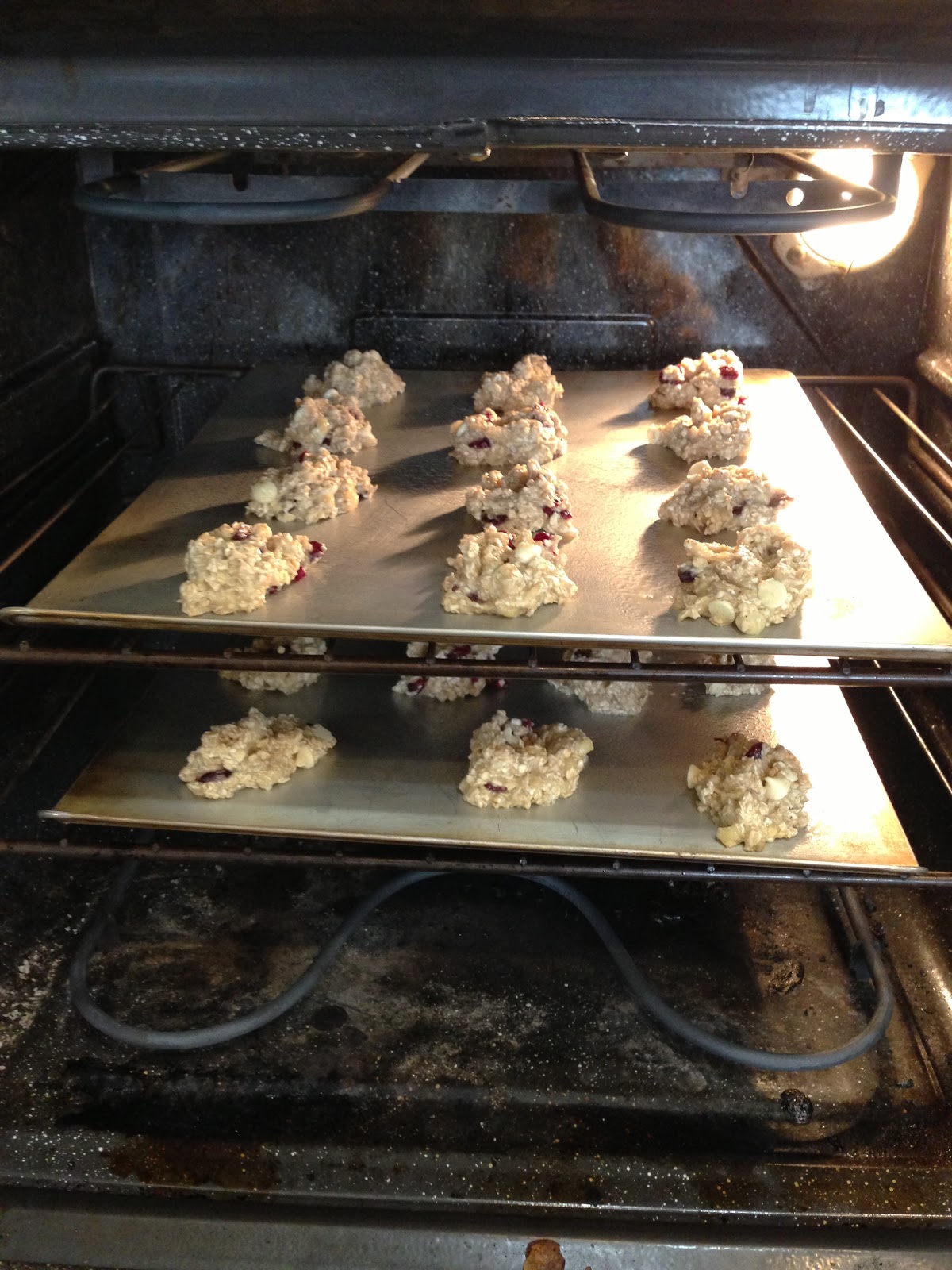
Low-Fat Oatmeal Breakfast "Cookies"

These cookies are a great meal idea for people who have a busy schedule and can't always make breakfast.  They are also a great for when kids want cookies, and you don't want to give them all of the sugar.

This recipe takes about 30 minutes total; that is from prep to clean up!

Mix all ingredients:

3 (extra ripe) Bananas, mashed
1/4 C Almond Milk
1/3 C no sugar added Apple Sauce
1 tsp. Vanilla Extract
2 C Oats
1/3 C Died Cranberries
1/3 C nuts, chopped (I substituted white chocolate for the nuts)
1 tsp. Cinnamon


Pre-heat the oven to 350 degrees.  Drop the dough onto cookies sheets 


and bake for 15-20 minutes.  


While they are baking, clean the few dishes it took to assemble the recipe.  Once they are out of the oven and cooled, remove them from the cookie sheets and wash those as well.  I like to store these in a bag in the refrigerator.


*Note: The less time these cookies are baked, they have a chewier consistency.  I like to bake mine a little longer to give more of a "cookie" consistency rather than an oatmeal consistency.

(Post moved from previous blog)

Saturday, April 19, 2014

How to Read and Understand a Nutrition Label

Understanding what is in your food is extremely important when purchasing groceries or making meals at home. Become a smart shopper and help feed your family the healthiest meal by reviewing this quick guide on how to read and understand a nutrition label.
You can compare food labels to see which foods are rich in fiber, calcium, iron, and vitamin C as well as search for low-sodium foods and foods that are low in saturated and trans fats.


The first thing to look at is the serving size. It is important to note this because if it states that the serving size is half a cup, and you eat one cup, you are really eating twice the calories, fat, carbohydrates and all other nutritional facts that the label states. Once you know the serving size, you will know the exact amount of nutrients you are putting into your body.

The calories are the first item listed on the nutrition label; this is important for people who are counting calories. After the calories, the fat per calories is listed. Within this section, the nutrition label will tell the consumer how many fat calories are from mono-fats, saturated fats, or trans fats. Mono-fats are the best fats to consume.

The nutrition label also shows the amount of Cholesterol and sodium in the measurement of mg. Total carbohydrates is the next section that states how many carbs are within that serving amount. It is also broken down, like fats, into sub categories. These categories include Dietary fiber and sugars. For people watching their carb intake, it is the sugars they need to be mindful of.  Dietary fibers are the better sub category of carbs. Lastly, there is a section for protein.

Keep in mind that the, fat, total carbohydrates, and protein should all equal the amount of calories per serving after they too are converted into calories. To convert these nutrients into calories instead of grams, follow these steps.

One gram of fat (1g) is equal to 9 fat calories, so if the label states there are 14g of fat per serving, then there are 126 calories of fat in that serving.

One gram of carbohydrate/protein (1g) is equal to 4 calories of carbs/protein. For example if there are 26g total carbs and 4g protein, then there are 104 carbohydrate calories and 16 protein calories. This would mean that the label should show that the added calories of these three categories adds up to the calories per serving; in this case 246 calories per serving.**NOTE: If the calories do not add up (like this label shown) you can call the manufacturer to let them know.  Most times, they will give you free product or coupons to make up for it!**

If this seems like too much work, or too time consuming to do at the grocery store, the nutrition label also as percentages on the right of each category that tells the reader what daily percentage this meal is equivalent to. Keep in mind, that these labels are usually based on a 2000 calorie diet, so if your calorie intake is below or above this number, it is recommended to take the time and do the above calculations.

Nutrition labels will also have a section at the bottom that shows the vitamin percentages for the serving size of that food. This is a good way to see which vitamins you are getting with your diet rather than swallowing with a pill.

(Moved from previous blog)

Thursday, April 17, 2014

The Skinny on Anorexia and Bulimia

The Subject of food and nutrition has always interested me; here is a paper I wrote a couple of years ago for an English class.  Someday, I would like to do more to raise awareness for the people who are currently and/or  have struggled with such a secret battle.
The Skinny on Anorexia and Bulimia
            Women and men of all ages and races are dealing with eating disorders throughout the world.  Anorexia and bulimia are two of the more known eating disorders; unfortunately, they are known because of the characteristics and harsh side effects that these diseases come with.  People who are affected by eating disorders are known to have low self-esteem and feel little self-worth (J Blechert, U Ansorge…).  Anorexia and bulimia are serious eating disorders that can lead to devastating consequences, and even though they are two different diseases, they can be classified as one.  These diseases are mostly recognized in women; however, men can acquire them as well; they can have the same side effects, and both are known to have deeply rooted psychological issues.  
            When one sees a “Lifetime” movie about an eating disorder, it is rarely about a male; the words anorexia and bulimia are most commonly associated with women.  Laurie Penny, an author for the New Stateman writes about the statistics of these disorders.  Penny writes that “3 per cent of young women” are effected by eating disorders; however, “many sufferers . . . happen to be male” (Penny).  Laurie Penny affirms that both anorexia and bulimia are non-discriminative; they both affect anybody and everybody.  Melissa Thompson, author of the Daily Record add to the statistics.  Thompson writes, “1 in 150 15-year-old girls and 1 in 1000 boys suffer . . . [and] 1 in 100 16 to 18-year-olds.  About 40 per cent recover completely” (Thompson).  "Although these disorders do not chose a steady type of stereotype, they both have common side effects.
            The side effects of both anorexia and bulimia can be deadly if not treated in a timely manner.  Some of the effects that these disorders include are distress around eating, obsession thoughts of food, weight and body image issues, depression, and generalized anxiety (Trunko, Schwartz, Duvvuri, Kaye).  Because both of these disorders prevent nutrients from being absorbed into the body, they have similar signs and symptoms.  Only a few of these signs and symptoms are; hair loss, low body temperature, bone mass density is effected, metabolic rate decreases, bruising is more visible, and many more.  These are serious physical effects that can lead to death; however, they start as non-physical issues.  Many eating disorders start as mental thoughts that escalate into physical issues. 
            Psychological issues are known to be the main source to both anorexia and bulimia.  An article in the Obesity, Fitness & Wellness Week writes, “A new report in Biological Psychiatry suggests that deficits in endocannabinoid function may contribute to anorexia nervosa and bulimia” (“Eating Disorders; Do deficits in brain cannabinoids contribute to eating disorders?”).   This proves that there is a chemical reaction in the brain. People who have these disorders both have a poor self-image due to a psychological problem. Melissa Thompson, author of “Anorexic mum who weighs less than her girl, 7; Sick Becky Starving” tells a story of a Mom with one of these disorders.  Thompson explains, “Rebecca Jones is proud she can wear her [seven year old] daughter’s clothes . . . .  ‘I don’t think I’m thin – I always see myself as bigger.  I long to be normal, but can’t help it’” (Thompson).  Self-esteem and self-image are a large issue in both anorexia and bulimia cases.  Unfortunately, few treatments exist for these disorders because it is psychological. 
            Although anorexia and bulimia are classified as two separate disorders, they are similar enough to be the same, and if left untreated, they can cause death.  These disorders have been heard of by most people because of their severity and popularity among young and famous people.  Because of self-esteem and self worth images that some individuals may have, eating disorders can become a serious and devastating disease.  Men and women of all ages and races are affected by both anorexia and bulimia; the side effects of these disorders are serious, and can be deadly.  If left untreated the side effects of these two diseases can lead to serious malnutrition; consequently, these diseases can lead to death.  If one has symptoms of these disorders or knows someone who does, the best way to seek help is through counseling.  Every person has a different degree of these disorders, so it is important to treat each case individually. 


 Works Cited
Blechert, J., U. Ansorge, S. Beckmann, and B. Tuschen-Caffier. "The undue influence of shape and weight on self-evaluation in anorexia nervosa, bulimia nervosa and restrained eaters: a combined ERP and behavioral study. " Psychological Medicine  41.1 (2011): 185-194. Health Module, ProQuest. Web.  13 Nov. 2011.
“Eating Disorders; Do deficits in brain connabinioids contribute to eating disorders?” Obesity, Fitness & Wellness Week 19 Nov. 2011: ProQuest Health and Medical Complete, ProQuest, Web. 13 Nov. 2011.
Melissa Thompson.  "Anorexic mum who weighs less than her girl, 7 :Sick Becky starving. " Daily Record  8  Nov. 2011, ProQuest Newsstand, ProQuest. Web.  13 Nov. 2011. 
Penny, L.. "Our disgusting appetite for anorexia chic. " New Statesman  10 Jan. 2011: ABI/INFORM Global, ProQuest. Web.  13 Nov. 2011.
Trunko, M., T. Schwartz, V. Duvvuri, and W. Kaye. "Aripiprazole in anorexia nervosa and low-weight bulimia nervosa: Case reports. " International Journal of Eating Disorders  44.3 (2011): 269. Health Module, ProQuest. Web.  13 Nov. 2011.